Discovering water pooling around your indoor air handler closet, dripping down drywall, or staining a plaster ceiling is one of the most alarming surprises a homeowner can face. In Naples, Florida, water leaks from cooling systems are remarkably common—and if not addressed immediately, they can lead to thousands of dollars in ruined flooring, collapsed ceiling drywall, and toxic black mold growth within 48 to 72 hours.
The good news is that your air conditioner does not use liquid water for cooling. The water leaking from your system is pure atmospheric moisture wrung out of your humid indoor air during the refrigeration process. Understanding why that water is overflowing rather than draining outside is the first step toward fixing the problem safely.
How Much Water Does an AC Produce in Florida?
In Naples, outdoor relative humidity frequently hovers between 70% and 90% from May through October. As your air conditioner cools your home, it performs an essential secondary function: dehumidification.
When warm, moisture-laden indoor air passes over the icy evaporator coil (typically 40°F to 45°F), moisture condenses on the aluminum fins—exactly like water droplets forming on the outside of an iced drink on a patio table. During peak summer conditions in Southwest Florida, a typical 3-to-5-ton residential AC system removes anywhere from 10 to 20 gallons of water per day from the air.
Under normal conditions, this moisture drips into an internal condensate pan, flows into a PVC drain pipe, and safely exits outdoors near your foundation or into an indoor plumbing drain. When any component of this drainage infrastructure fails, that massive volume of water has nowhere to go except into your living space.
5 Common Reasons Your Air Conditioner Is Leaking Water
1. Algae and Biofilm Blockage in the Condensate Drain Line
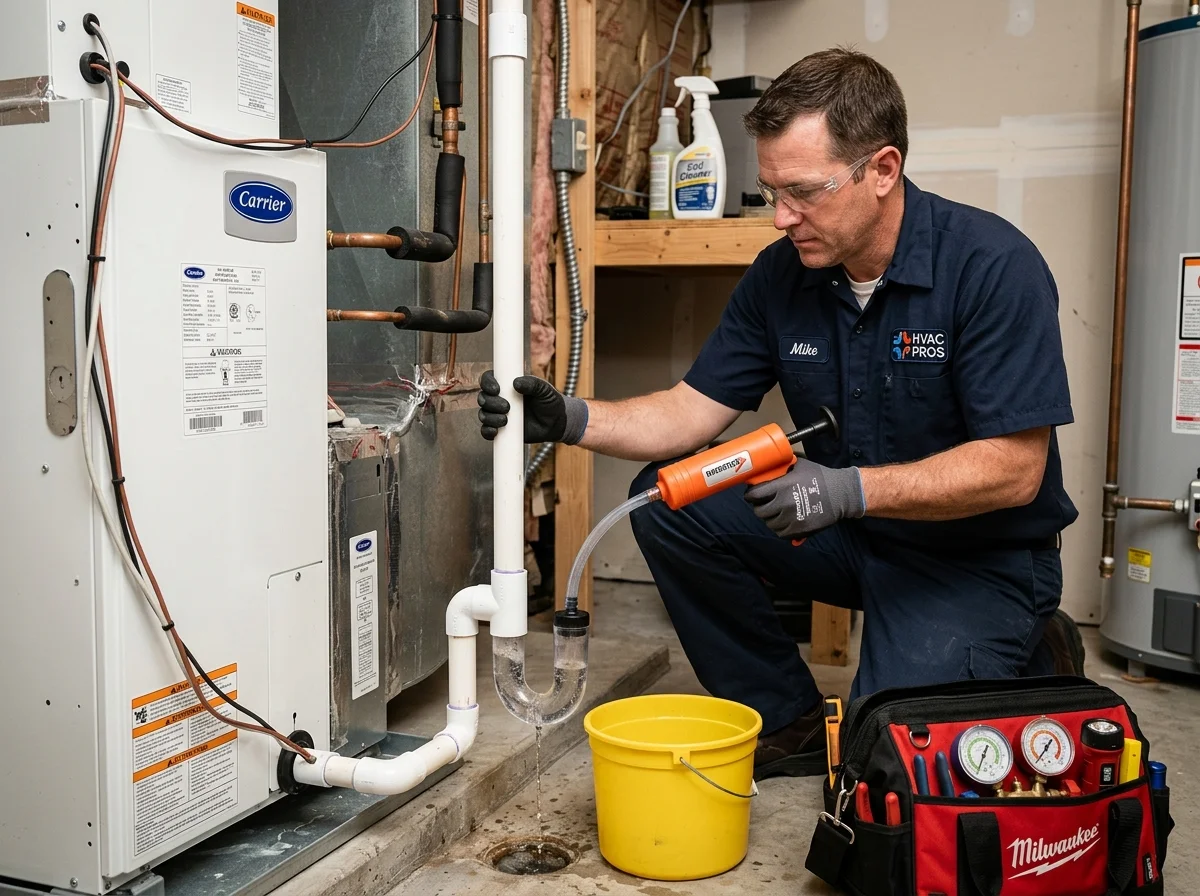
By far the most common culprit in Collier County is a blocked primary condensate line. The inside of a dark, warm Florida drain pipe carrying constant moisture is an ideal breeding ground for algae, airborne mold spores, and Zooglea bacteria. Over several months, these micro-organisms produce a thick, gelatinous sludge that completely plugs the 3/4-inch PVC drain pipe. Water backs up into the drain pan and spills over the edges. Learn more in our comprehensive guide on clearing condensate drain clogs.
2. Cracked or Corroded Condensate Drain Pan
Your system features a primary drain pan directly beneath the evaporator coil and often a secondary emergency metal pan under the entire air handler. In systems older than 7 to 10 years, metal pans can rust through due to continuous exposure to water. Plastic pans, while rust-proof, can crack from thermal cycling, vibration, or over-tightened PVC drain fittings, allowing water to trickle directly through the bottom of the air handler cabinet.
3. Frozen Evaporator Coils Melting Rapidly
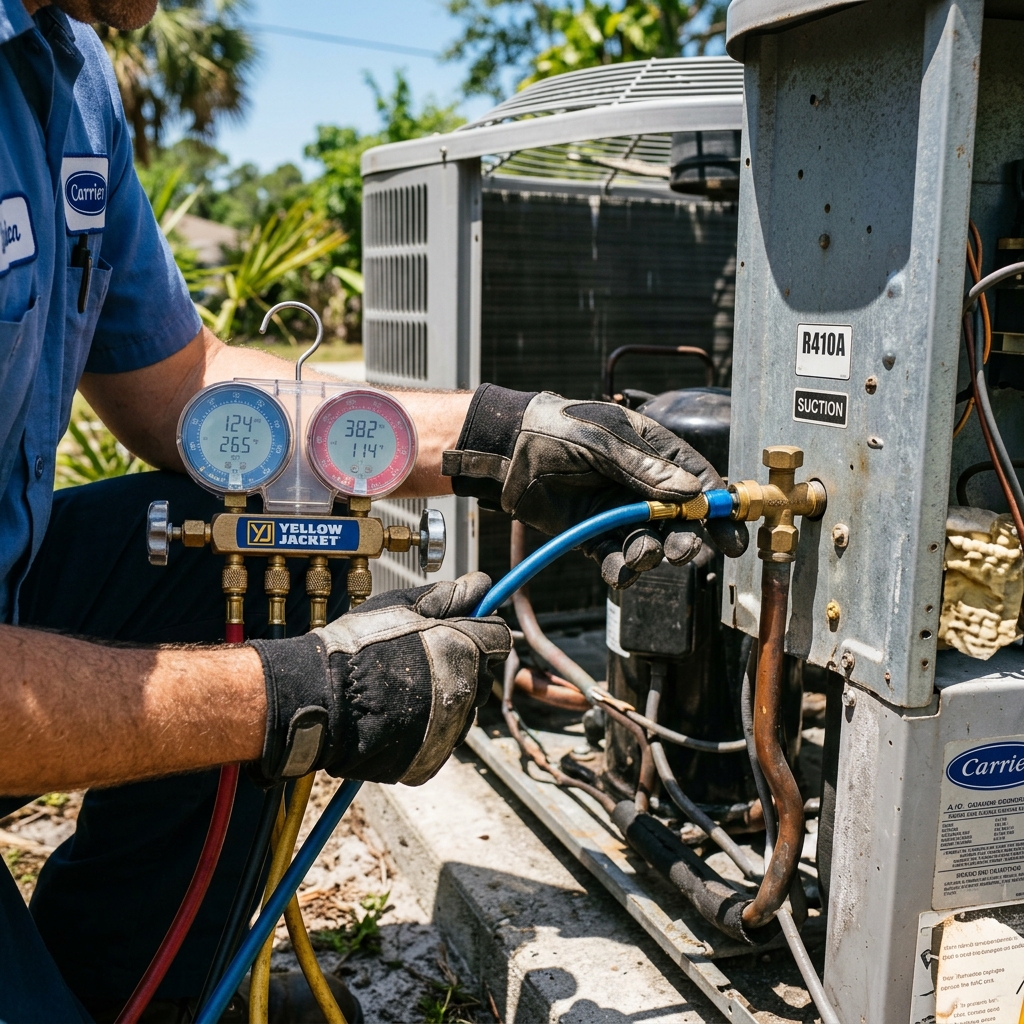
If your system develops a dirty air filter, restricted airflow, or low refrigerant charge, the evaporator coil will freeze into a solid block of ice. When you or the system finally shut off the unit, that block of ice begins to thaw rapidly. The sudden deluge of melting ice overwhelms the drain pan's shallow channels, spilling sheets of water over the sides and flooding the equipment platform.
4. Disconnected, Unpitched, or Broken PVC Drain Piping
Condensate lines rely on gravity to move water downward toward the outdoor exit (unless assisted by a mechanical condensate pump). If attic insulation workers or storage boxes bump the PVC line, altering its slope or cracking a glued elbow joint, water will pool inside the pipe, stagnate, and leak at loose fittings.
5. Failed Condensate Removal Pump
If your air handler is installed in a basement, interior closet, or location where gravity drainage to the outdoors is impossible, a motorized condensate pump lifts the water through vinyl tubing out of the home. If the pump's internal float sticks, the motor burns out, or the check valve jams, the small collection reservoir overflows onto the surrounding floor.
The Critical Role of the Float Switch
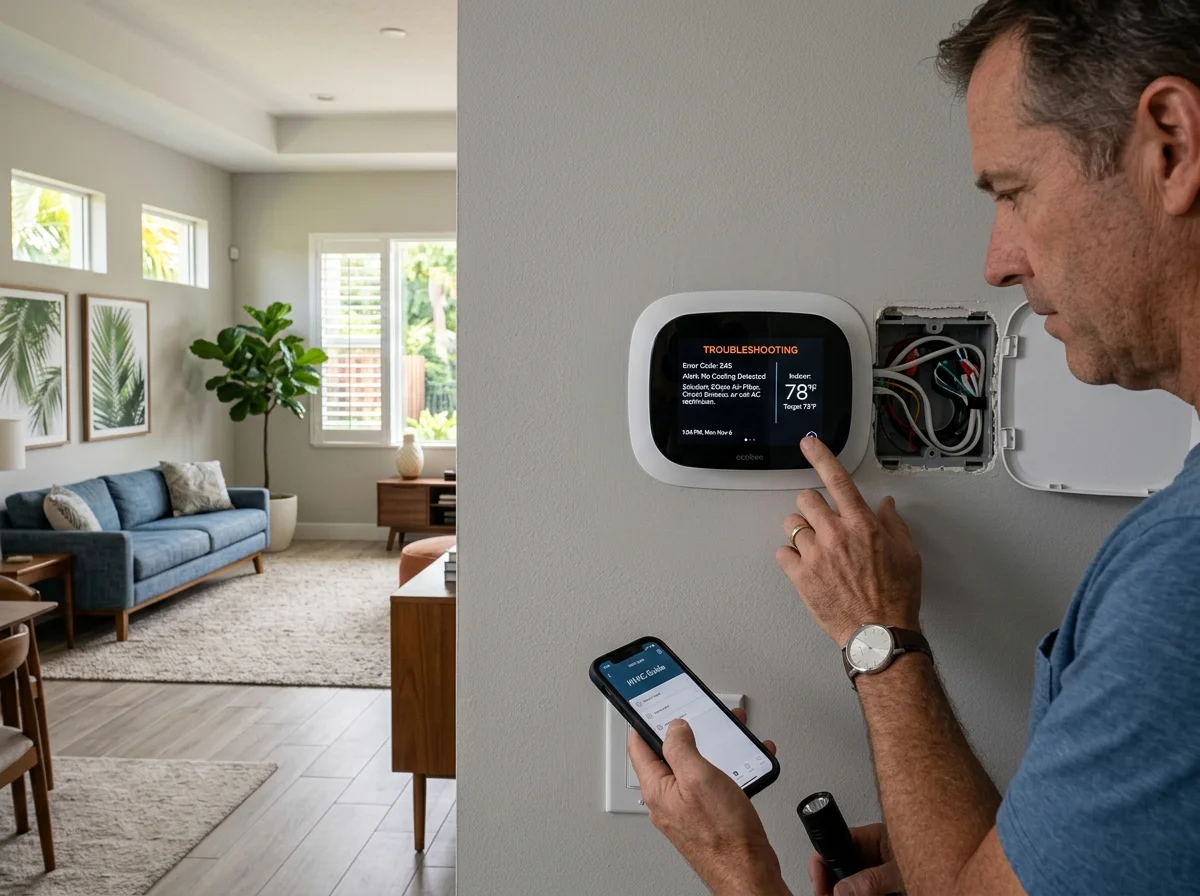
Modern building codes in Florida require a secondary float switch installed in the drain pan or auxiliary drain line. When water levels rise dangerously, this magnetic switch trips, immediately cutting electrical power to the outdoor condenser or entire system to prevent flooding. If your AC suddenly stopped running and won't turn back on, an active water leak may have triggered your safety switch!
What to Do RIGHT NOW If Your AC Is Leaking
If you discover active water leakage from your air conditioner, follow this immediate emergency protocol:
- Turn the AC System OFF at the Thermostat: Stop the production of new condensation immediately. Do not leave the fan running.
- Switch Off the HVAC Circuit Breakers: Water and 240V electricity are a deadly combination. Cutting power at the breaker panel protects against electrical shocks and short circuits.
- Mop Up Standing Water Immediately: Use towels, mops, or a wet/dry shop vacuum to clear standing water from baseboards, drywall, and ceilings. Run fans or a standalone dehumidifier to prevent mold spores from germinating.
- Inspect the Primary Drain Access: If your drain line has an open T-pipe, check whether standing water is visible at the brim. If water is backed up, you have an active clog.
- Call a Licensed HVAC Technician: A professional technician will clear the line using high-pressure nitrogen, inspect the pan for structural cracks, and test the safety float switches.
Experiencing an Active AC Water Leak in Naples?
Water leaks require fast response to prevent structural water damage and microbial growth. Our emergency response team arrives equipped to clear clogs, repair pans, and protect your home.
How to Prevent AC Water Leaks in Florida Homes
Routine preventative maintenance is far cheaper than remediating ceiling drywall or replacing hardwood floors:
- Monthly Vinegar Flushes: Pour 1/2 cup of distilled white vinegar into the condensate T-pipe access every 30 days. The mild acetic acid kills algae and prevents biofilm accumulation without damaging PVC glue or ABS plastic pans.
- Inspect the Outdoor Drain Terminus: Verify that the white PVC pipe exiting outside near your condenser is dripping freely and not buried in garden mulch, grass roots, or ant hills.
- Install a Safe-T-Switch: If your system lacks an emergency float switch, have our technicians install one during your next seasonal AC maintenance tune-up.
Frequently Asked Questions About Leaking AC Units
Is water leaking from my AC dangerous?
Yes. While the water itself is not chemically toxic, standing water near 240-volt electrical controls presents a severe shock hazard. Furthermore, in Naples' warm climate, water that leaks into ceiling drywall or floor insulation breeds Aspergillus and Stachybotrys mold within 48 to 72 hours, creating serious indoor air quality hazards.
Can a dirty air filter cause water to leak?
Absolutely. A choked air filter restricts airflow across the evaporator coil, causing the coil to freeze into a solid block of ice. When the ice thaws between cooling cycles, the massive volume of meltwater overflows the shallow drain pan, spilling gallons of water into your home.
Conclusion
A leaking air conditioner is a clear warning sign of a clogged drain line, frozen coils, or damaged equipment. Shut the system down, remove standing water, and contact AC Repair Naples Fl for prompt, professional condensate drain clog repair across Naples and Collier County.