Low refrigerant is never normal—it always indicates a leak. We provide comprehensive troubleshooting to pinpoint the source, repair the tubing, and restore precise cooling pressure.
Heated diode electronic sniffers detect refrigerant escaping at rates as small as 0.1 oz per year around flare nuts, Schrader valves, and service ports.
When microscopic leaks evade electronic sniffers, we pressurize isolated line sets with dry nitrogen up to 350 PSI to expose hidden cracks with micro-bubble solution.
Once located, we weld and seal copper cracks using 15% silver brazing alloy with continuous nitrogen purge, preventing interior carbon flaking and future leaks.
We evacuate the circuit down to 500 microns to remove moisture, then weigh virgin R-410A or R-22 on digital scales to manufacturer decimal-ounce specifications.
Many Naples homeowners don't realize that AC refrigerant does more than absorb heat—it also acts as the primary cooling fluid for the hermetic compressor motor itself.
When refrigerant charge drops, the compressor motor temperature spikes past 250°F. The compressor oil breaks down into corrosive acid, leading to mechanical seizure and complete system burnout costing thousands of dollars to replace.
Additionally, low suction pressure causes the indoor evaporator coil to drop below freezing, encasing your air handler in a solid block of ice that blocks airflow and floods ceilings when it melts.
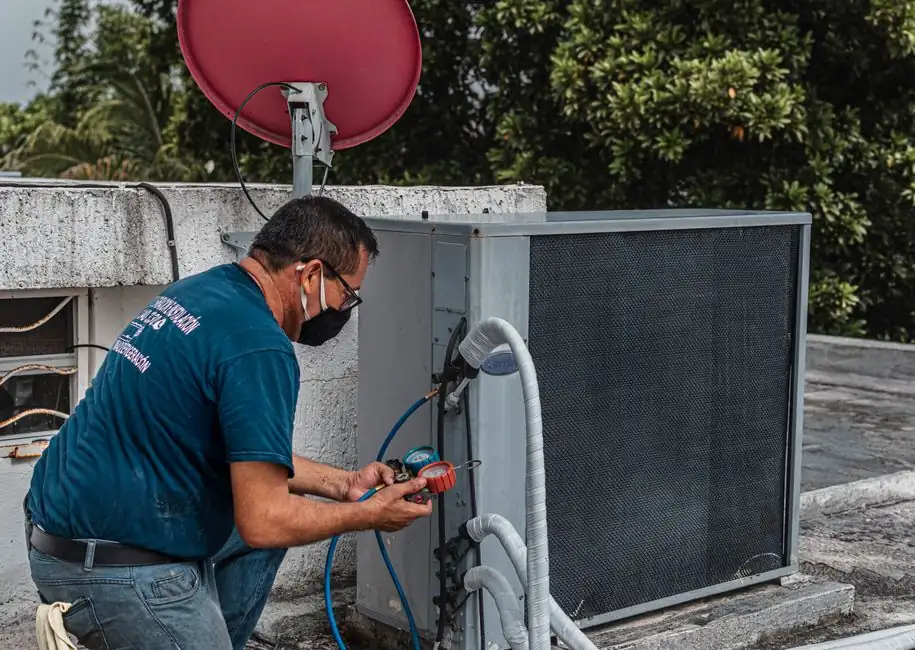
We connect digital smart manifold gauges to read saturation temperatures, calculating exact real-time subcooling and superheat metrics.
Using electronic detectors and nitrogen pressure testing, we find the exact fracture, braze the leak, or replace failed Schrader cores.
A two-stage rotary vane vacuum pump draws moisture and non-condensables out below 500 microns to protect POE compressor oil.
We weigh virgin refrigerant into the high side liquid line, verify compressor amp draw, and confirm ice-cold 54–58°F supply air vents.
Issue: Condenser unit was hissing and vents were blowing 76°F air. Suction pressure measured only 65 PSI.
Result: Pinpointed cracked brass flare nut on line set. Re-flared copper with nitrogen purge, evacuated to 380 microns, and added 2.8 lbs R-410A. Vents returned to 55°F.
Issue: Marine salt air caused galvanic pitting on outdoor suction line copper where it met aluminum fins.
Result: Silver-brazed damaged section, installed anti-vibration rubber mounts, and recharged 3.5 lbs virgin refrigerant.
Issue: Air handler coil froze completely solid, shutting down system on low-pressure cutoff switch.
Result: Safely thawed coil, replaced leaking Schrader valve core, performed nitrogen pressure decay test, and recharged to factory subcooling.
Under EPA regulations, handling refrigerants requires federal certification and recovery equipment. Our technicians carry Universal licenses and recovery machines to prevent illegal atmospheric venting.
Higher pressure, zero ozone depletion, fully stocked on all service vans.
Certified reclaimed stock available for older residential and commercial systems.
The most common symptoms include vents blowing warm or lukewarm air, ice forming along the refrigerant copper lines or evaporator coil, hissing or bubbling noises near the outdoor unit, AC running non-stop without reaching thermostat setting, and a sudden spike in your monthly FPL electric bill.
Air conditioning systems are closed hermetic circuits that never consume or burn refrigerant. If your AC is low on Freon, it has an active leak. Simply topping off refrigerant without locating and sealing the leak violates EPA regulations and will result in the new refrigerant leaking out again within days or weeks.
R-22 (traditional Freon) is an ozone-depleting hydrochlorofluorocarbon that was phased out under the Clean Air Act. Modern systems use R-410A (Puron), which operates at higher pressures and is environmentally safer. Our technicians service both legacy R-22 and current R-410A systems.
Naples' salty sea breezes accelerate formicary corrosion on copper tubing and aluminum condenser fins. Over time, microscopic pinhole leaks develop in the U-bends and service valves. We use electronic sniffers and nitrogen bubble tests to locate these tiny coastal leaks.
Rapid diagnostic for frozen coils, warm vents, and low airflow.
Learn More →Restore compression pressure, repair suction/discharge valves, and fix leaks.
Learn More →24-point seasonal inspection, coil cleaning, and precision efficiency tuning.
Learn More →Complete diagnostic and repair service for rooftop and ground packaged HVAC units.
Learn More →