Few household discoveries trigger immediate stress quite like feeling warm air pouring from your air conditioning registers during a humid, 92-degree Southwest Florida afternoon. In Naples, where cooling systems run upwards of 2,800 to 3,300 hours annually, an air conditioner blowing hot air is not just a nuisance—it can rapidly elevate indoor temperatures past 85°F, spike humidity above 75%, and create unsafe conditions for family members and pets.
When your system blows warm or room-temperature air, it usually means the indoor blower motor is still circulating air, but the refrigeration cycle responsible for pulling heat out of your home has failed. Before you panic or assume you need an entire new HVAC system, take a structured approach. Several common causes can be diagnosed quickly, while others require immediate professional intervention from an EPA-certified technician.
Key Takeaway for Homeowners
If your indoor vents are blowing ambient or warm air while the outdoor unit is silent or humming strangely, turn your thermostat to OFF immediately. Continuing to run an air handler when the cooling cycle has stalled can overheat the compressor motor and lead to severe, avoidable equipment damage.
1. Simple Checks Homeowners Can Safely Perform in 5 Minutes
Before calling for emergency service, there are three safe, non-technical items every Naples homeowner should verify:
Check the Thermostat Fan Setting ('ON' vs. 'AUTO')
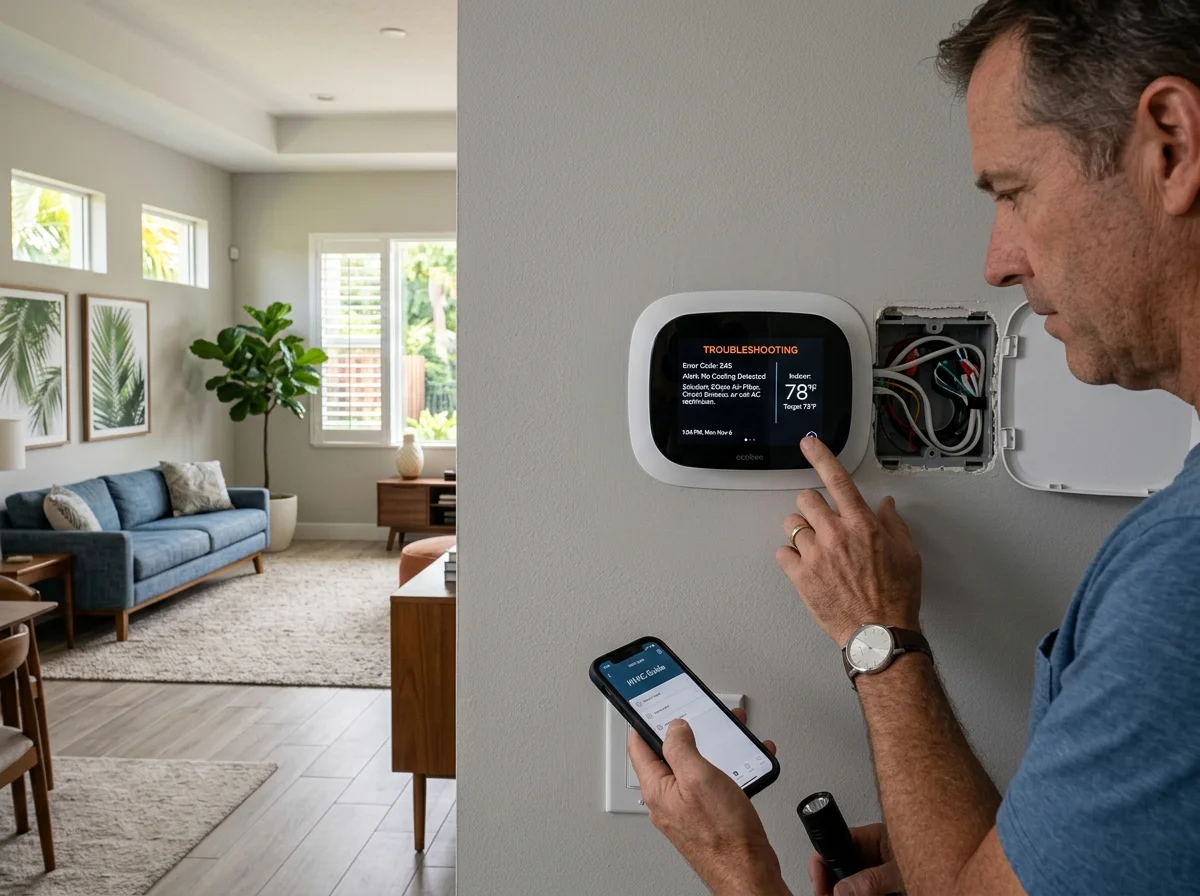
This is the single most common false alarm our service technicians encounter. If your thermostat's fan setting is accidentally toggled to ON instead of AUTO, the indoor blower will run 24 hours a day, 7 days a week—even when the outdoor compressor is resting between cooling cycles. When the compressor shuts off, the fan continues blowing room-temperature air through your ducts, giving the sensation that the AC has stopped cooling. Verify that your thermostat mode is set to COOL and the fan switch is set strictly to AUTO.
Inspect Your Return Air Filter
Southwest Florida's heavy cooling loads mean air filters collect pet dander, drywall dust, and coastal debris much faster than in northern climates. A severely clogged 1-inch pleated filter chokes airflow across your indoor evaporator coil. When warm indoor air cannot pass freely across the cold coil, the refrigerant cannot absorb heat properly. Over several hours, the coil drops below 32°F, forms an insulating block of frost, and restricts airflow until only a weak trickle of warm air emerges from the registers. If your filter is gray, fuzzy, or bowed from static pressure, replace it immediately.
Verify the Outdoor Electrical Disconnect and Breakers
Your HVAC system operates on two separate electrical circuits: a 120-volt circuit for the indoor air handler/blower and a dedicated 240-volt double-pole breaker for the outdoor condensing unit. During summer thunderstorms with frequent lightning in Collier County, an electrical transient or brief voltage drop can trip the outdoor breaker while leaving the indoor unit powered on. The indoor fan will happily blow warm air while the outdoor condenser sits completely de-energized. Check your main electrical panel for a tripped breaker and reset it once. If it trips again immediately, leave it off—that indicates a direct electrical short.
2. Common Mechanical and Refrigeration Causes
If the thermostat settings, filter, and breakers are normal, the issue is almost certainly mechanical or electrical within the outdoor unit or refrigeration lines. Here are the most frequent culprits in the Naples area:
Failed Contactor or Dual-Run Capacitor
In the outdoor condenser, the dual-run capacitor serves as an electrical battery booster that supplies the starting torque needed to spin the compressor and condenser fan motor. Naples' relentless heat puts tremendous thermal stress on capacitors. Under continuous high operating temperatures, capacitors swell, leak dielectric oil, and lose microfarad capacitance. When a capacitor dies, the fan may spin weakly while the compressor hums and trips on internal thermal overload, resulting in warm indoor air.
Refrigerant Leaks and Low Pressure
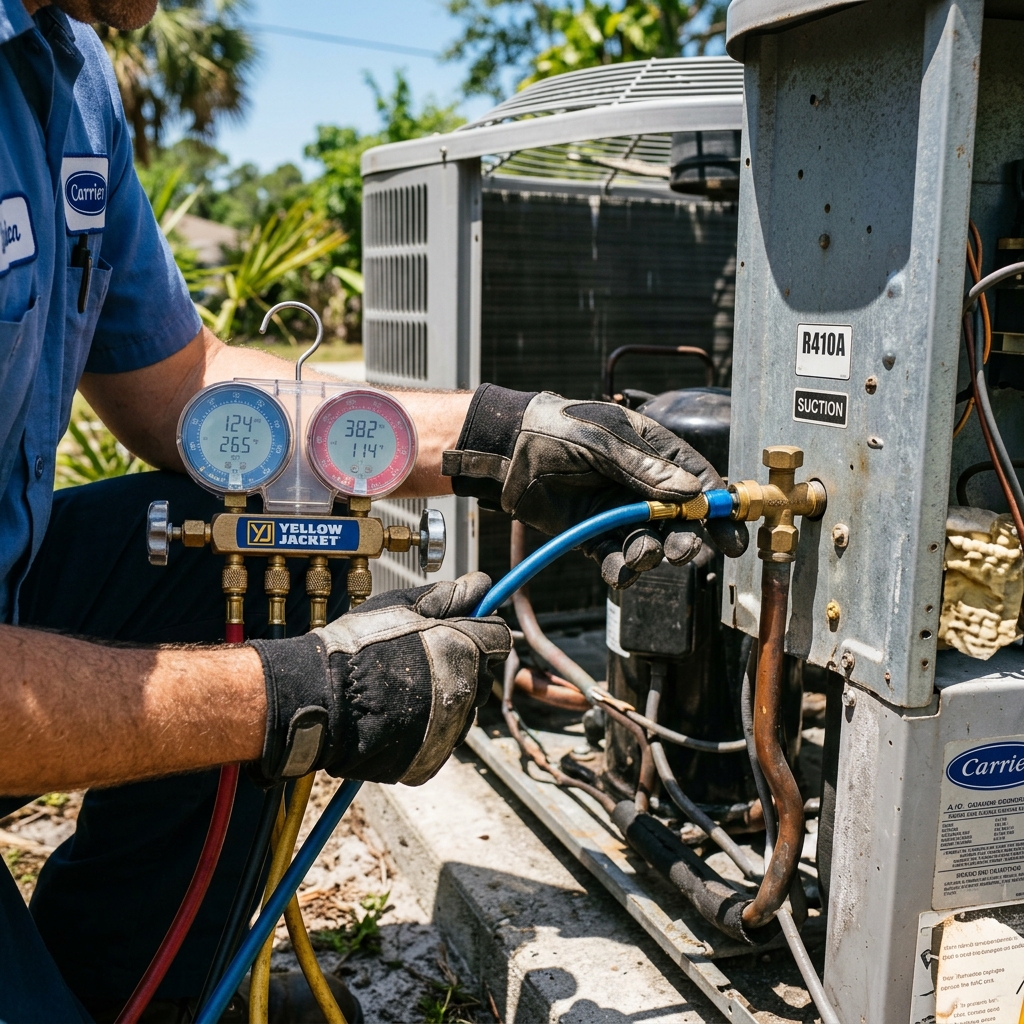
Air conditioners operate on a closed, pressurized loop of refrigerant (such as R-410A). An air conditioner does not "consume" or burn through refrigerant over time. If your system is low on refrigerant, there is a physical hole or fracture in the copper tubing, service valves, or coil joints. Low refrigerant pressure prevents the evaporator coil from absorbing thermal energy from your indoor air. Furthermore, running a system low on refrigerant starves the compressor of the cool suction vapor it needs for internal lubrication and motor cooling, which can cause permanent mechanical seizure. If you suspect low pressure, you need professional refrigerant leak detection and recharge service.
Dirty Outdoor Condenser Coils (Salt Air and Foliage)
In coastal communities like Aqualane Shores, Port Royal, and Park Shore, airborne salt spray combines with lawn clipping debris, sand, and palm fibers to coat the exterior aluminum condenser fins. When the condenser cannot reject absorbed indoor heat into the outdoor air, head pressures skyrocket. Modern compressors feature internal high-pressure relief switches that cut off compressor operation to prevent catastrophic burst damage, leaving only the indoor fan circulating hot air.
Clogged Condensate Drain Line Safety Float Switch
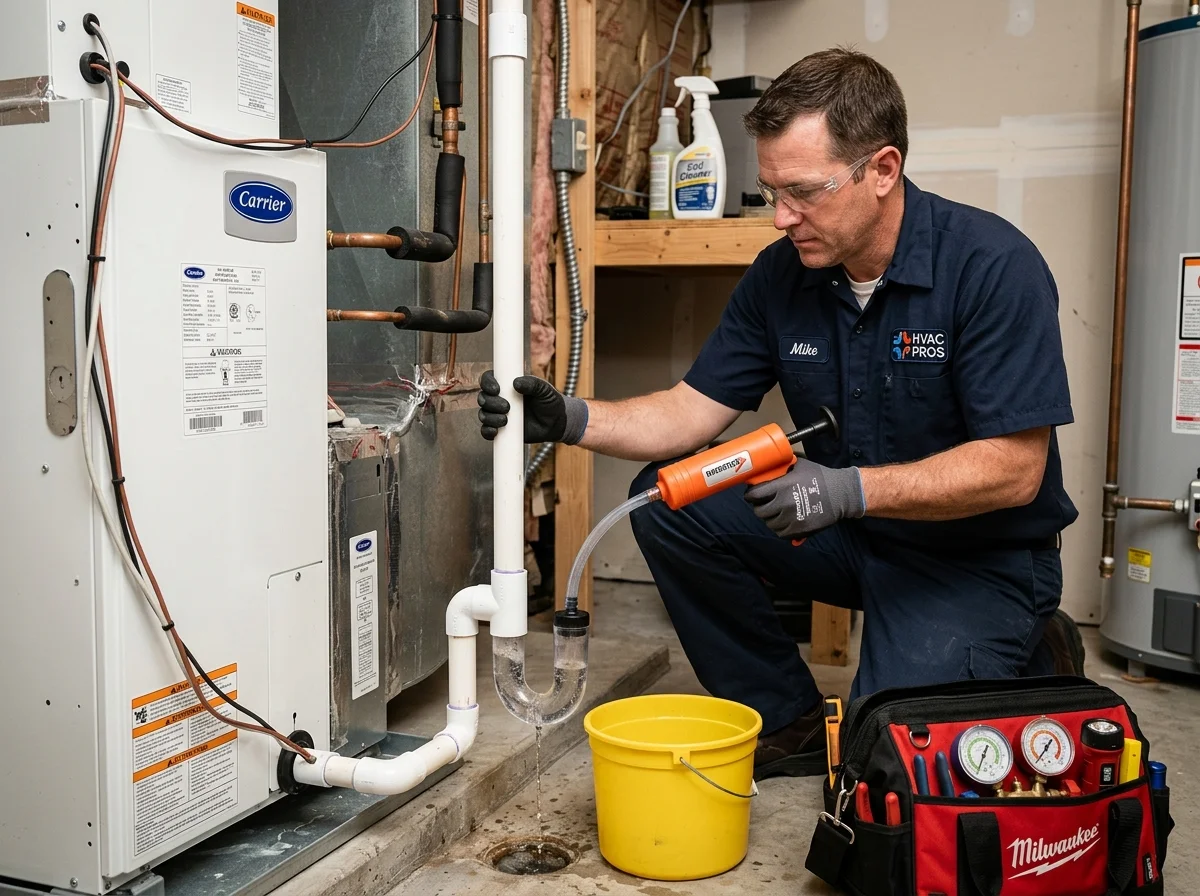
In Southwest Florida, high atmospheric humidity means your evaporator coil wrings 10 to 20 gallons of water out of the air every single day. If the PVC condensate drain becomes plugged with algae slime or microbial sludge, water backs up into the primary drain pan. Modern installations feature a secondary overflow safety float switch (Safe-T-Switch) wired directly into the thermostat's 24V control circuit. Many smart thermostats or wiring configurations cut off the outdoor compressor to prevent ceiling water damage while keeping the indoor fan active. Check our guide on condensate drain line clearing to learn how this safety switch protects your home.
Warning: Do Not Attempt DIY Refrigerant or High-Voltage Electrical Work
Air conditioning compressors utilize 240-volt electrical service with capacitors that retain lethal electrical charges even when power is disconnected. Additionally, federal EPA regulations prohibit venting or handling fluorocarbon refrigerants without Section 608 certification and specialized recovery equipment. Always entrust mechanical and electrical diagnostics to licensed HVAC professionals.
3. Why Continuing to Run a Malfunctioning AC Is Dangerous
Many homeowners think that leaving an air conditioner running while it blows warm air won't hurt, hoping that "it might kick back on." In reality, this is one of the most expensive mistakes you can make:
- Compressor Burnout: The compressor is the multi-thousand-dollar heart of your HVAC system. When it runs without proper refrigerant flow or with failing start components, its internal windings overheat. A burned-out compressor acidifies the entire refrigerant circuit and frequently mandates a complete equipment replacement.
- Extreme Humidity Infiltration: Running the indoor blower when cooling has stopped pushes evaporated moisture back into your living space, rapidly driving indoor relative humidity above 70%, creating ideal conditions for microbial and mold growth on drywall, vents, and furnishings.
- High Electric Bills: A struggling compressor trying repeatedly to start draws locked-rotor amperage (LRA), consuming massive electrical power and spiking your utility bill.
Need Immediate Help with Warm Air from Your AC?
Our licensed, bonded technicians arrive in fully stocked service vehicles equipped with digital manifold gauges, diagnostic meters, and genuine OEM replacement parts to restore ice-cold air today.
4. When to Call an Emergency AC Technician in Naples
You should schedule prompt professional diagnostic service if you observe any of the following symptoms:
- The outdoor unit makes a persistent buzzing, humming, or clicking sound without the fan spinning.
- You see ice accumulating along the insulated brass suction line entering the indoor air handler.
- You smell a distinct burning electrical odor or hot metallic scent from your supply vents.
- Your circuit breaker trips instantly every time the thermostat calls for cooling.
- The indoor air temperature continues rising despite proper thermostat settings and clean filters.
At AC Repair Naples Fl, our certified technicians perform a comprehensive 24-point diagnostic evaluation including refrigerant superheat and subcooling measurements, capacitor capacitance tests, motor amperage draws, and coil static pressure analysis. We provide upfront, transparent flat-rate pricing before starting any repair work so you always know your options.
Conclusion
An air conditioner blowing hot air during a Florida summer is an urgent issue, but identifying whether it is a simple thermostat setting or a mechanical component failure will help you act quickly. If basic filter and thermostat checks do not resolve the warm airflow, switch the system to OFF and contact our team for trusted, same-day AC not cooling repair in Naples, FL.