If you ask any HVAC technician in Southwest Florida what the single most frequent service call is between May and October, the answer is unanimous: a clogged condensate drain line. Because Naples experiences extreme atmospheric humidity throughout the long summer cooling season, your air conditioning system removes gallons of condensation from your home every day.
When that water cannot drain freely to the exterior, it backs up into the drain pan, triggers emergency float safety switches, and can flood closets, ceilings, and drywall. Knowing what to do when your drain line clogs—and how to maintain it—is one of the most valuable skills a Florida homeowner can possess.
Why AC Drain Lines Clog So Frequently in Florida
Many homeowners assume a clogged drain line is caused by household dirt or pet hair. While dust does play a minor role, the real culprit is biological.
The interior of a white 3/4-inch PVC condensate pipe is completely dark, constantly warm, and continuously flooded with clean distilled water condensed from your home's air. This environment is an ideal incubator for airborne algae spores, mold fungi, and Zooglea bacteria. As these micro-organisms feed and colonize the pipe walls, they produce a thick, viscous biological slime commonly known as "white slime" or biofilm. Over 2 to 4 months of heavy cooling, this rubbery sludge fills the pipe diameter, completely choking off gravity drainage.
How to Tell If Your AC Drain Line Is Clogged
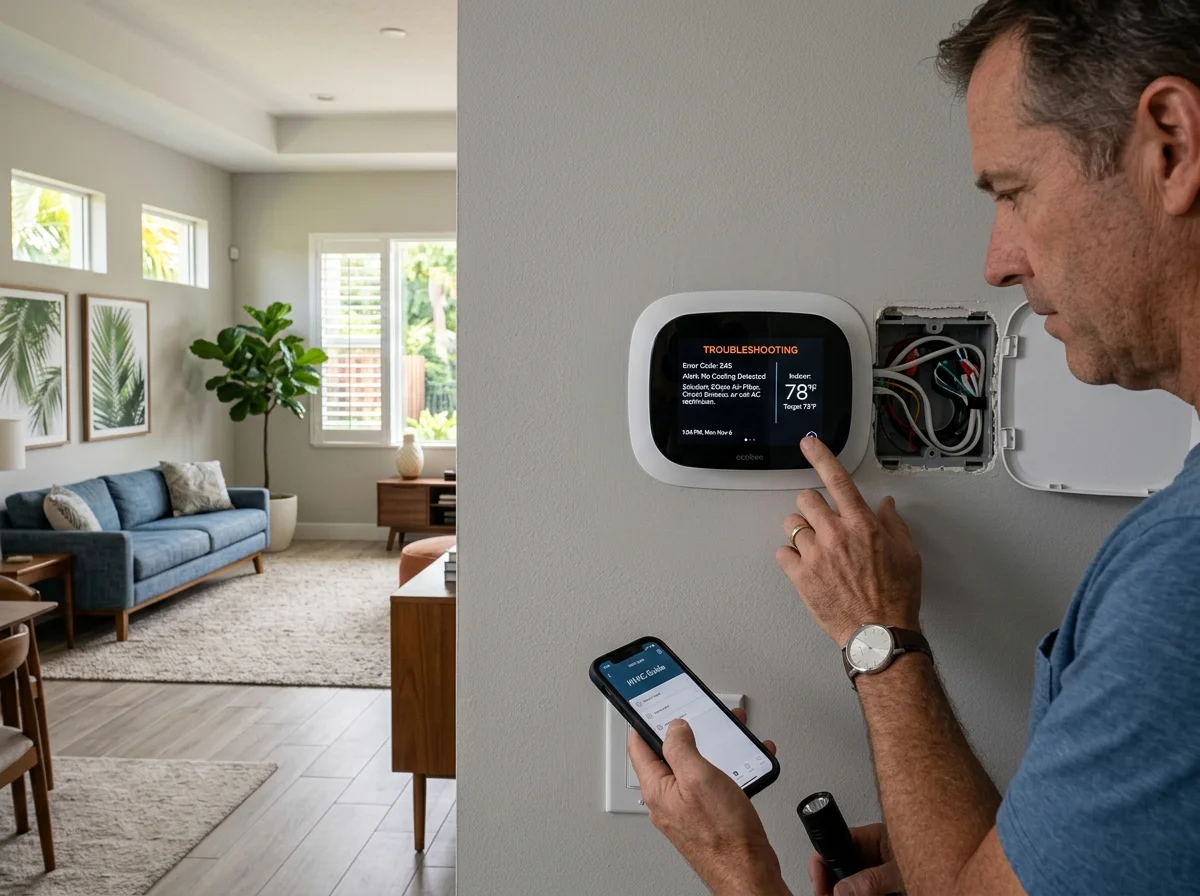
- The AC Shuts Off Suddenly and Won't Restart: Modern systems feature an emergency float switch (Safe-T-Switch) in the drain line. When water backs up, the float rises, breaks the low-voltage control circuit, and prevents the unit from running.
- Standing Water in the Drain Pan: If you open your air handler closet or peer into your secondary attic pan and see standing water, the line is obstructed.
- Damp, Musty Odors Near Supply Vents: Stagnant water sitting in a drain pan for days creates an unmistakable sour, musty smell throughout your ductwork.
- Water Dripping from the Exterior Eaves: Many Naples homes feature an emergency overflow line that drips out of the roof soffit over a window. If water is dripping from this overhead pipe, your primary ground-level drain is 100% blocked!
Understanding P-Traps and Vent Tees in Florida Systems
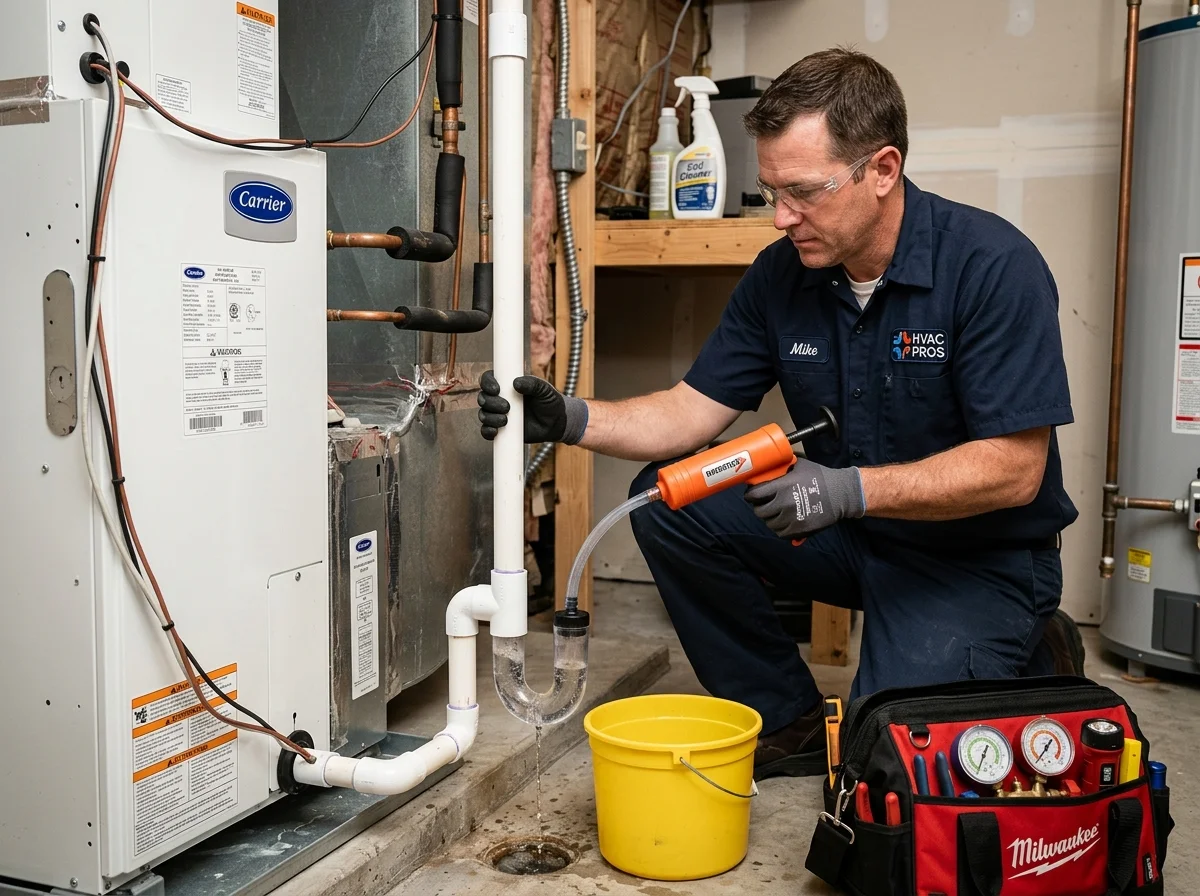
Your condensate line is not just a straight pipe—it requires specific plumbing geometry to function under negative air pressure. Inside draw-through air handlers, the blower fan creates negative pressure across the evaporator coil. Without a water-filled P-trap, the blower sucks air backwards through the drain pipe like a giant straw, preventing water from draining while the fan runs.
When the fan finally shuts off, the trapped water rushes into the drain all at once. Over time, poorly pitched traps create airlocks where air bubbles get stuck between water pockets, halting flow. A properly installed Florida drain line includes an accessible cleanout tee, a correctly sized P-trap, and an unglued cap for regular flushing.
Step-by-Step: How to Safely Clear a Clogged Drain Line
If you catch a clog early, here is a safe, proven DIY procedure using tools found in most homes:
Step 1: Shut Off Power to the HVAC System
Always switch off power at the thermostat and main electrical breaker before working on or near your indoor air handler.
Step 2: Locate the Condensate Access T-Pipe
Near your indoor air handler, locate the white PVC pipe exiting the cabinet. Most installations feature an upward-pointing vertical PVC T-pipe or access port with a removable slip-cap. Pull off this cap to reveal the drain opening. If water is filled to the very top of the pipe, the obstruction is downstream.
Step 3: Clear the Line Using a Wet/Dry Shop Vacuum
Head outside to the exterior wall near your outdoor condensing unit, where the 3/4-inch PVC drain pipe exits the foundation. Attach the hose of a wet/dry shop vacuum to the end of the drain pipe, sealing the connection tightly with a rag or duct tape. Run the vacuum for 2 to 3 minutes. The strong suction will dislodge and pull out the gelatinous algae plug along with gallons of backed-up drain water.
Step 4: Flush with Distilled White Vinegar
Return to the indoor access port and slowly pour 1 to 2 cups of regular distilled white vinegar into the open T-pipe. Vinegar's mild acetic acid cuts through residual algae without damaging the PVC piping or dissolving the glue at pipe joints.
Avoid Harsh Chemical Drain Openers and Bleach
Never pour Drano, caustic lye, or high concentrations of chlorine bleach into your AC drain line. Caustic chemical drain cleaners create exothermic heat that can warp thin PVC pipes and melt plastic drain pans. Pure bleach fumes can enter your indoor ductwork, corrode aluminum coil fins, and degrade the adhesive at PVC elbow fittings.
When to Call a Professional HVAC Technician
While a shop vac works for minor clogs, stubborn blockages frequently require commercial clearing techniques. You should call our professional team if:
- The shop vac fails to pull any water or the clog recurs within a few weeks.
- Your system lacks an accessible T-pipe or features complex P-traps inside sealed walls.
- Water has leaked through your ceiling or saturated drywall, requiring rapid moisture extraction.
- Your emergency float switch has failed or remains stuck in the open position.
Our technicians use regulated high-pressure nitrogen gas blowouts to instantly scour the entire length of the drain line, install clear inspection traps with clean-out valves, and treat the pan with long-lasting antimicrobial timed-release enzyme tablets.
Stubborn Drain Clog Shutting Down Your AC?
Don't risk ceiling water damage or mold growth. Our technicians provide fast, mess-free nitrogen drain blowouts and complete float switch inspections across Naples.
Frequently Asked Questions About Clogged Drain Lines
How often should I clean my AC drain line in Naples?
In Naples, you should pour 1/2 cup of distilled white vinegar into your primary condensate access port once a month, year-round. This simple preventative habit dissolves algae before it can coagulate into a pipe-blocking plug.
Why did my AC turn off without tripping the breaker?
If your thermostat screen is blank or your AC suddenly stopped running while the electrical breaker remains in the ON position, your emergency float switch (Safe-T-Switch) has almost certainly tripped due to standing water in the drain line. Clearing the water allows the float to drop and restores power.
Conclusion
A clogged AC drain line is an urgent annoyance, but fast action with safe clearing methods will keep your home dry and your cooling restored. For stubborn clogs or recurring drain backups, reach out to AC Repair Naples Fl for expert condensate drain clog repair in Naples, FL.